CUSS Logo

arts and environment

Currently updating — New content 2026

Nadia Myre Exhibition

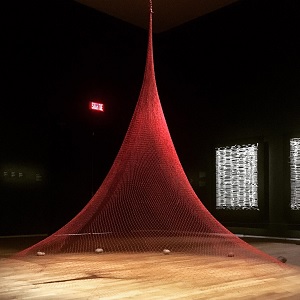
"Curiously, the combination of the quiet exhibition space and the steady, cyclical motion of the net suggests the rhythm of breathing, effectively arousing a kind of embodied awareness of a visitor's own respiration, particularly in relation to pace, depth and sound. As though caught in a trance, one begins to enter a relationship of unconscious mimesis, re-adjusting each breath to closer reflect the even breaths of the installation."

— Melinda Pierre-Paul Cardinal

January 2018

Melinda Pierre-Paul Cardinal's review of Nadia Myre's Tout Ce Qui Reste - Scattered Remains: A Woman. Artist. Indigenous. Exhibition at the MMFA in Montreal

Logan MacDonald - The Lay of the Land

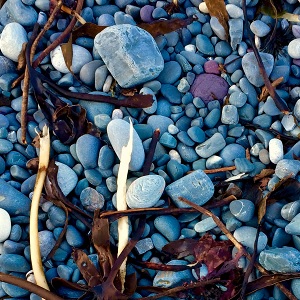
"Consider the photo installation, Coast to Coast (NL, ON, YK). Three photographs: one of detritus, one of a graffito, and one of a fire pit. Each photograph relates a different narrative in turn, and at face-value reveals a different stage of alteration. However, there is more to consider: that they are printed on metal which is not diminutive of the subject matter as it does appear quite beautiful. Yet we are obligated to accept that we are getting a photo of a surface served on a surface, enlarged and fashioned horizontally as if it could be the essence."

— Martin Poole

November 2017

Martin Poole reviews Logan MacDonald's exhibit The Lay of the Land

Dr. Peter Trnka - Downtown St. John's

"The images were photographed using my cellphone camera, a device readily accessible to many inhabiting this environment. The images were taken quickly, to keep with the directives of the game, i.e., obeying the rule of a short, brisk walk. After the walk was completed, the images were then selected (19 from a couple of dozen or so, hence few deletions); the selections were cropped, and light and color fixed."

— Dr. Peter Trnka

September 2017

Dr. Peter Trnka finds Art in the moment, during a stroll in downtown St. John's

Grass in the Sky Exhibition

"The point of this digression is to illustrate that sometimes art and viewer are inseparable, that when art permeates our environment we sometimes complete it. And so, we then experience an opposite effect; not the effect of going to a gallery to see art dangling from white walls, but an effect that blurs the boundary between art and reality...however, tenuous that distinction is."

— Martin Poole

August 2017

Martin Poole on Grass in the Sky: Pepa Chan, Kailey Bryan and Mimi Stockland

Michael Massie Sculpture

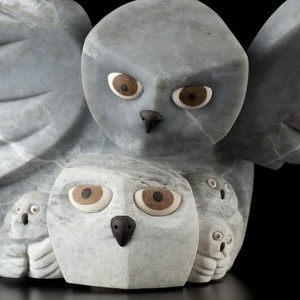
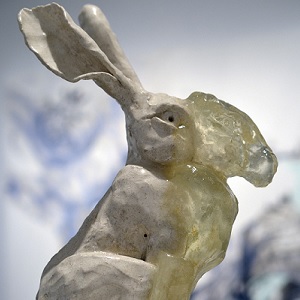
"Sculpture is deceivingly simple. Unlike paintings, photographs, and other plastic arts, sculpture is not normally framed or put behind glass, it is objectively individual, a self-contained art piece that acts as its own vessel. The presentation is built-in, and offers little outside of these physical limits. There are obvious exceptions to this, but the point is that sculpture, in many cases, is an art piece that is physically complete."

— Martin Poole

April 2017

Personal Mythology in the Sculpture of Michael Massie by Martin Poole

Mike Gough Art

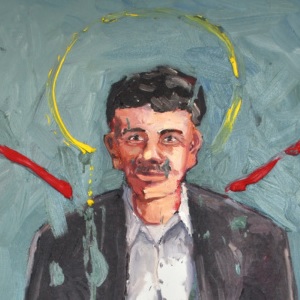
"Semblances of language appear within the painting; clouds as near-legible marks on the sky, and shrubs and grass directly on the landscape. Perhaps we are witnessing a confusion that comes from a desire to remember, and a quick burst of words stands in for the moment and things missed—the sky, the land, elements that he remembers were present, but cannot affix detail. In turn, Gough's hand simultaneously writes and draws."

— Martin Poole

January 2016

Martin Poole discusses the art of Mike Gough

Matthew Hollett Exhibition

"Placing an idea of the Newfoundland landscape in association with the celebrated Japanese printmaker breaks the tendency to navel-gaze, bringing the work into a broader more global context if still highly popularized. The image, a partially covered blanket in the snow, would be a familiar sight to many local residents. In St. John's, households are encouraged to cover their garbage pick-up with blankets or fishing nets to keep birds away. The fresh layer of snow transforms the candy colored blanket into a vast mountain range, hence at the relationship to the Japanese printmaker. Here Hollett seems to suggest we look to the now, to the everyday instances where place is affirmed, rather than the past alone. It is a soft and beautiful work that hints at broader questions."

— Mary MacDonald

December 2015

Mary MacDonald discusses Matthew Hollett's recent exhibition at The Rooms in St. John's, Newfoundland